This is the story of the family of John Skinner Prout: his wife Maria, their children and some of their grandchildren. They and their children lived at various addresses in and near Camden New Town.
John Skinner and
Maria
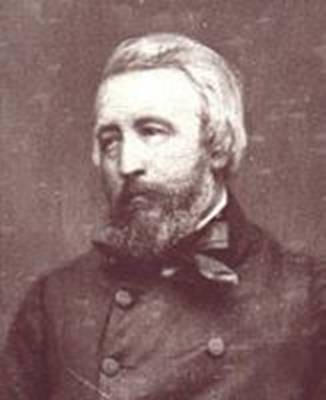
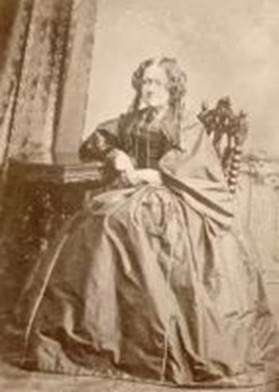
John Skinner Prout was born in 1805 in Plymouth, Devon, the eldest child of John Prout and Maria Skinner. He was a nephew of the better-known Samuel Prout, a prominent watercolourist, of whom Ruskin is supposed to have said “Sometimes I tire of Turner, but never of Prout”.
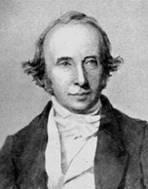
Samuel Prout
Although there is no evidence that Skinner was trained by his uncle or indeed had much contact with him, he must have been very aware of him and his work. He seems to have gone by the name Skinner, perhaps to distinguish him from his uncle. I shall refer to him by that name.
Skinner married Maria Heathilla Marsh in 1828 in Colaton Raleigh, Devon. During the next sixteen years she bore eleven children, the first in 1829. She may well have had other pregnancies as well but apart from one of the sons, killed in an accident, she brought the eleven children to adulthood
Maria was the eldest daughter and second child of John and Mary Ann Marsh. She seems to have received instruction in music and in later life worked professionally as both a teacher and performer, as did her brother Stephen Marsh. At some point she studied in London with the celebrated harpist and composer Nicolas Charles Bochsa.
Maria worked as a music teacher, as well as moving house several times within Penzance and then to Bristol and London and despite frequent pregnancies. But sadly there is no evidence of any actual tuition or concerts she may have undertaken in England. It was not a time when many women had a real career but Maria was clearly capable of a career and actually had one during the time later in Australia, as we shall see. She is also recorded as a painter but we have no information about that at all.
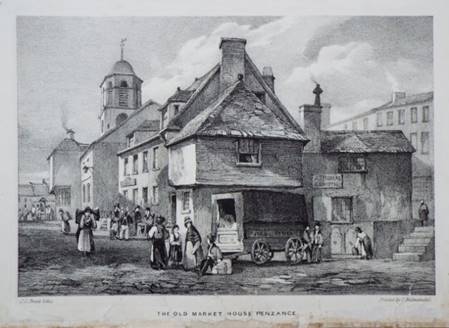
Skinner started his career as artist, lithographer and drawing instructor in 1827 in Penzance. He drew and lithographed numerous scenes around Penzance between 1827 and 1831:
Bristol (1832-1837),
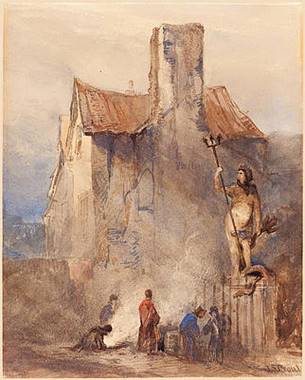
northern Devon (1836-40), and Monmouthshire, Chester and York (1838-1840).
The family moved to Clifton, Bristol in 1832. Skinner became a member of a sketching club with William J. Müller
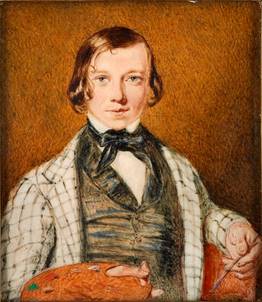
and Samuel Jackson, with whom he visited Wales and Ireland.
They moved to London in 1838 and lived in Marchmont Street,
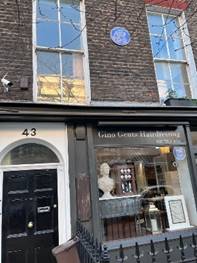
where there is a blue plaque. In the same year Skinner was elected a member of the New Society of Painters in Water Colours. He also published a monograph The Castles and Abbeys of Monmouthshire.
In
1840 the family, seven children, emigrated on Royal Sovereign to
Australia. Later Skinner published Journal of a voyage from Plymouth to
Sydney in Australia: on board the emigrant ship Royal Sovereign, with a short
description of Sydney.
Skinner’s brother Cornelius
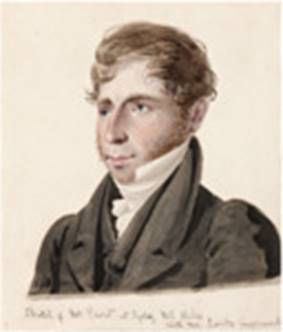
had already settled and was an under-sheriff. A cousin, the poet Samuel Prout Hill,
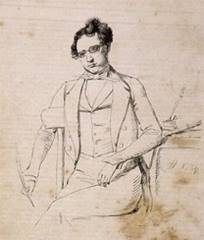
who could have been the grandson of Samuel Prout, came to Australia while they were there. It is not clear how much contact Skinner and Maria had with these relatives. Nor is it clear that they shared Hill’s homesickness, as expressed in one of his poems:
ISLE of my fathers! Mighty state! An exile from thy shores, —
A wand'rer in a far-off land — this humble tribute pours.
Arise, fair Nature! all thy charms in majesty display,
And let thy brightest beams illume the glories of her day.
Dear England! how my soul expands on hearing thy lov'd name!
It brings back all my youthful sports — my glory in thy fame;
To be a son of thy fair clime — to owe to thee my birth,
Embrace at once the only charms — the brightest gifts of earth.
My heart within me leaps again — again I am with thee; —
This is no conjur'd joy I feel — no trick of poetry; —
Once more I grasp thy long lost charms —
I wander on thy shore
The hope was that Skinner could advance his career as painter, artist and printer. He took a lithographic press with him and so was able to set up The J S Prout and Co Australian Lithographic Establishment. Lithography came into common use only in the 1830s after various technical problems had been ironed out. So Skinner’s introduction of it to Sydney in the 1840s must have been pioneering.
He held a number of exhibitions of his work, lectured on the technique of drawing and painting in watercolour, sold numerous works and produced a series of lithographic views of the colony, some of which were published as Sydney Illustrated (with John Rae)
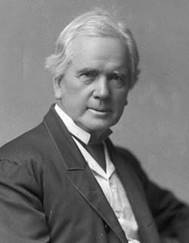
John Rae
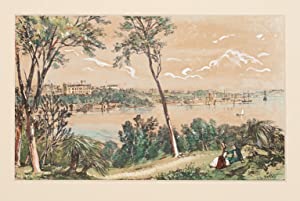
and Tasmania Illustrated, in two volumes each.
He worked as an artist (in oils and watercolour) and as a theatre scene-painter, as well as teaching and lecturing at the Sydney School of Arts.
Skinner travelled widely throughout the then-sparsely-settled districts around Sydney, seeking subjects, returning to his studio where he produced finished works in watercolour and oil for sale, along with various lithographs.
In Sydney he held a number of exhibitions of his works and in 1845 organised the first exhibition of art in Australia, followed by a second, highly successful, exhibition in 1846.
Unfortunately, the attempt to set up business as a professional artist and printer was largely unsuccessful. The slow market for his works, competition by more established artists such as Conrad Martens,
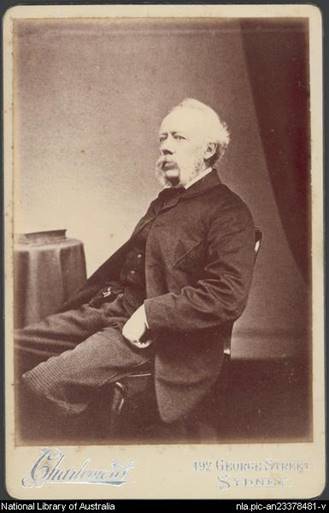
as well as the depressed economy of Sydney, led Skinner to move his growing family to Tasmania (then called Van Diemen's Land) in February 1844. Here he was a little more successful in earning a living, partly due to the patronage of the governor Sir John Franklin
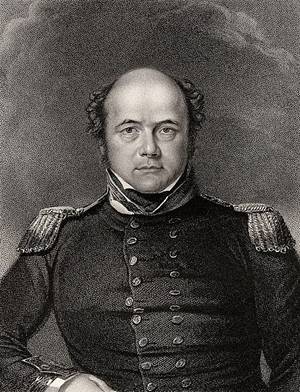
(who later died trying to traverse the Northwest Passage) and of his wife, the Lady Jane.
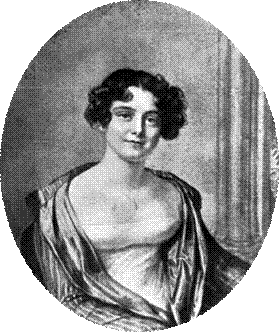
The stay in Tasmania was also relatively short.
Their time in Tasmania occurred some fifteen years after the dreadful Black War, during which the original Tasmanians were virtually exterminated by the European settlers. The Tasmanian landscape was heavily altered by fire. There is a current debate about the extent to which this was done by the original inhabitants or by the settlers, or both. Skinner’s paintings, and those of another British-born artist, John Glover,
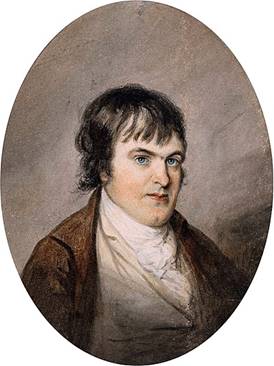
who arrived in Tasmania in 1830, are still being studied for the light they might throw on this question. Julia Lum writes:
At present, there is scientific debate about the degree to which the landscape was burnt, and such practices are not without their own histories of dynamic change, but fire ecologists generally agree that distinct zones of vegetation were sharpened by the first Tasmanians, who maintained the savannah grasslands that upon their conversion to pasture became known by British settlers as the “Midlands”. By measuring the surviving native vegetation of the Midlands, ecologists have proposed that three artists in particular — John Glover, John Skinner Prout, and the latter’s sketching companion Francis Simpkinson de Wesselow — most faithfully represent Tasmania’s changing vegetation during the decades of rapid settlement
Although Skinner was probably disappointed at how things worked out in Australia and although he was there for only eight years, he made a mark on Australian art and it was recently said of him
Due to his adventurous spirit and positive nature, [Prout's] time in Australia influenced art appreciation and acceptance among the public in the colonies of New South Wales, VanDiemen's Land and Victoria.
The Art Gallery of New South Wales has many of his paintings:
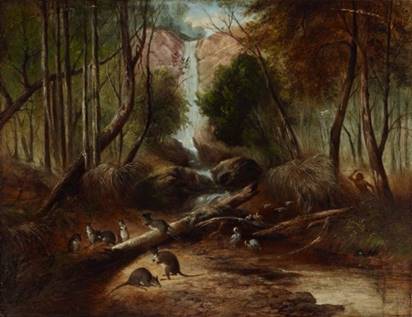
Maria, despite having eight children to care for, had a career that is also still remembered in Australia.
In 1841 she held a concert in the Royal Victoria Theatre.
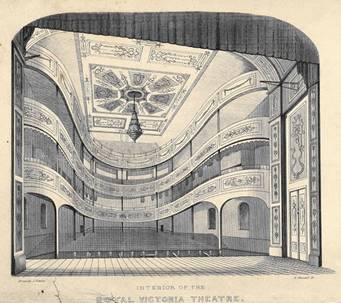
The Australian reviewed her performance on the piano in glowing terms:
It is as gratifying as it is astonishing, to find in this remote part of the British dominions, talents in the arts and the elegancies of life, which would meet with commendation and applause from the most cultivated society in the metropolis of the empire.
Of the same, or of another, concert in 1841 The Sydney Gazette and New South Wales Advertizer wrote:
Mrs. Prout's pianoforte concerto, was worthy of this lady's reputation.
And another reviewer wrote:
Maria Prout, an able harpist, gave several concerts "with peculiarly happy effect" at the Royal Victoria Theatre in Sydney, but thereafter withdrew to domestic duties.
Having illustrated her piano and harp playing skills, she advertised her availability to provide lessons, and contributed significantly to music-making during her time in Australia, both as teacher and performer. And she did not withdraw to domestic duties but rather initiated many musical activities. By arranging concerts she created an important social entertainment environment for Sydney music lovers during the years 1840 to 1844.
Early in 1842 her brother Stephen arrived at Sydney
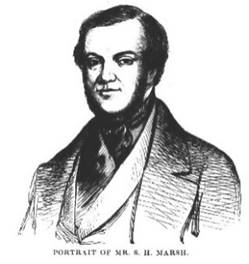
on the Sir Edward Paget
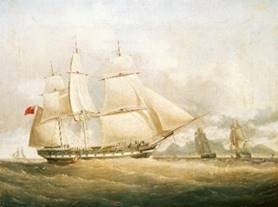
The Sir Edward Paget
and they gave a concert together.
Their time in Tasmania was marred by a family tragedy involving their son Frederick (born in 1834) In 1845 there was an accident and, although we have no details, young Frederick was hit by a random stone and died.
This
added to the family’s difficulties and may have contributed to their decision
to return to England. Because even though things seem to go better in Tasmania,
Prout’s career still was not progressing as they had hoped. They sailed on The
Derwent.
Back in Britain in 1848 they move a bit north from where they lived before, to 12 Camden Terrace. The house is still there but has the address 154 Camden Street.
In 1850 Prout reproduced his paintings from Australia on glass lantern slides. These were later re-presented as a moving panorama, which was shown around Devon and then in London, where it ran for six months in Leicester Square
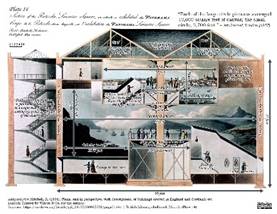
and later at the Royal Polytechnic Institution. The twice-daily performances required Skinner’s presence to provide a commentary
and kept him, and other members of the family, fully occupied. To be near where the presentations took place, they moved to 13 Osnaburgh Street, near Regent’s Park. The Art Journal (the most important British 19th-century art magazine) described them as:
A series of views from sketches made in Australia by Mr. Prout…. They comprise the principal points of attraction in the Colony and show the peculiar features of its landscape scenery which in some instances is very characteristic and beautiful. The views of the penal settlements exhibit the peculiarities of convict life in all its distressing forms, and the anecdotes with which the lecturer enlivens his local information tend towards the clearer comprehension of the same phase of society.
There no direct evidence that Skinner was ever involved in photography but his pioneering use of lithography, the technical details of his panorama presentations and his sons’ career choices make it very likely that he at least took great interest in the latest developments in art-related technology.
He also travelled round England and Europe. His trips to the continent yielded many sketches and watercolours that are still being auctioned today. His watercolour and gouache Rue St-Etienne, Rouen (now in Lytham St Annes Art Collection)
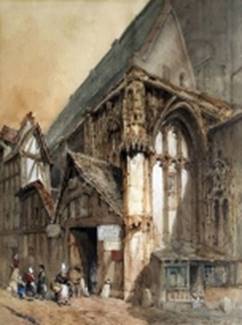
is very like his Continental Street Scene
, (now in Reading Museum)
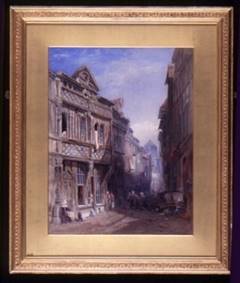
and was probably painted at the same time.
He also wrote, publishing an article in The Fine Arts in Australia soon after their return to London, and two in The Illustrated London News, one of them describing the voyage to Australia.
Before they finally settled in Camden New Town as we know it now, they lived nearby in Leighton Crescent , eventually moving to 38 Saint Augustine’s Road
in 1854 or 1855, though they seem to have retained some stake in Osnaburgh Street as some of their elder chidden lived there later.
Between 1854 and 1856 Prout exhibited regularly at the New Society of Painters in Water Colours annual exhibitions.
There is no evidence of Maria’s activities after they returned from Australia but it is unlikely that she was inactive, if only as a teacher. She died in 1871 and is buried in Highgate Cemetery in a family grave. She was living in Leighton Crescent and was suffering from gout and heart disease. (The tombstone gives her age as 62 but this is not compatible with a birth date of 1807.)
In her autobiography The True Story of My Life Alice Mangold-Diehl,
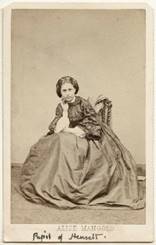
who was a noted pianist and novelist and lived near the Prouts in Leighton Crescent, gives us a unique description of Skinner near the end of his life:
In this year [1870] I noticed a very fascinating old gentleman, in a black velvet coat, whose silver hair belied his youthful, energetic movements, escorting a delicate-looking old lady, who was assiduously waited upon by two young ladies, evidently her daughters, in and about [Leighton] Crescent which was opposite our house and that of the Coppings, who lived two doors above us.
Skinner Prout was the successor in painting - notably water-colour - of his uncle, the celebrated Samuel Prout. I was delighted to be introduced to him, although he was hardly his usual bright self after the recent death of his beloved partner of a most eventful life. His conversation was not only brilliant, but so full of knowledge ripened by deep thought, that it was indeed an important event to be admitted to his intimate acquaintance . . .
Seated by him on a bench in Leighton Crescent, which he liked “because there was such a grand sky-view” I learnt to see nature with new eyes.
It is perhaps significant that she does not refer to Maria’s musical life because her autobiography is mainly about the mid-century musical scene in England and as a great name dropper she would almost certainly have said more about Maria had been she been at all well-known.
Samuel died 1876 and is buried in the same grave as Maria.
We turn now to Maria and Skinner’s daughters. There is virtually no information about them and four of them appear never to have married so we do not even have information about their married life. Presumably two of these are the daughters referred to by Alice Mangold-Diehl.
Three of them however did marry, two of them to husbands about whom we have quite a lot of information, so we can have a fair idea about the sort of life their wives lived. (Though it goes against the grain nowadays to characterise a woman’s life entirely with reference to their partners.) We shall deal with these two before going on to talk about their brothers.
Matilda Dandridge/Nowell
Matilda Dandridge (later Nowell)
Matilda was born in 1829 in Penzance, the eldest of the family. She married twice and both her husband’s left a mark in the record. We have particularly clear evidence that she was closely associated with the work of her first husband.
In 1847 she married John Strange Dandridge in Tasmania. This was just before her parents returned to England. As far as we know, she never saw her parents again. They had four children.
Dandridge was born in England, in Droitwich, Worcestershire, in 1823.
After the Black War mentioned above, the remaining members of the original Tasmanian population were treated with a mixture of brutality, insensitivity and racist condescension. They ended up in a settlement in Oyster Cove
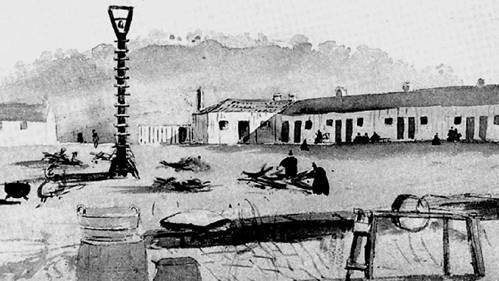
south of Hobart and virtually died out as a population. They were supervised in various unsatisfactory ways until John Dandridge was put in charge of the settlement. The Dandridges took up residence in Oyster Cove in July 1855 and he spent the rest of his life there, dying in 1874.
The couple are reported to have taken a real interest in the Australians and their welfare. When the settlement was finally abandoned in 1874 due to severe flooding, Mathilda took the last surviving member of the group, Truganini,
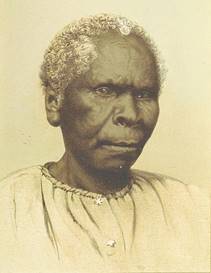
also known as Lalla Rookh, to live with her in Hobart.
In 1884 she married Edwin Craddock Nowell.
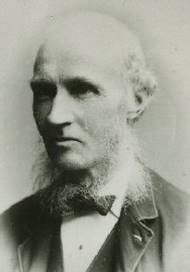
It was also his second marriage. He worked in Tasmania as a government official: clerk in the Governor's Office from 1857, then clerk of the Legislative Council of Tasmania (1862 to 1864), government statistician from 1867 to 1882, and Superintendent of the 1881 census. In 1903 he was made a member of the Imperial Service Order. He died in 1911.
Matilda lived on until 1916 and is buried in Tasmania.
The
Coppings
The other two daughters married a pair of brothers, so we will take their stories together.
Anna
Maria Copping and Samuel Copping
Anna was born in 1831 in Cornwall. We hear nothing about her until 1858 when she married Samuel (1819-1900) who was born in Shoreditch. She died in about 1901 when living in Hertfordshire. There is not any information about Samuel but his brother is more interesting.
Rosa
Heathilla Copping and Edward Copping
Rosa was born 1833 (in Bristol) and Edward in 1828 (in Shoreditch.
Edward was a journalist. He was Paris correspondent for the Daily Telegraph for two years and then works at The Daily News for twenty-six years.
He also wrote books: a comic work, Lobster Salad (with Percy B. St. John), Alfieri and Goldini (a biography of two Italian dramatists which was well reviewed in The Athenaeum) and a travel book Aspects of Paris. He also wrote for the for the stage as well as a novel, The Home at Rosefield (1861), a tragedy about a man who throws his heart away on a coquette. It received poor reviews. Poor health forced him to resign his editorial position in 1888 and he died in 1904.The couple had four sons and one daughter.
Harold
Copping
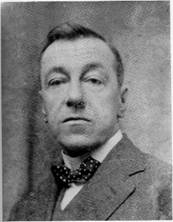
Rosa and Edward’s second son, Harold was born in Camden Town in 1863. He became an artist, trained at the Royal Academy School and won a Landseer scholarship, which enabled him to study in Paris. He specialized in religious paintings and bible illustrations. The most famous of these was The Hope of the World (1915).
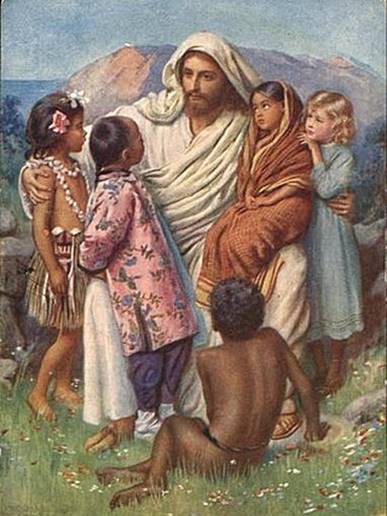
It shows Jesus sitting with children from different continents and was one of the most the most popular picture of Jesus produced in Britain in the twentieth century. He also produced an illustrated bible (‘the Copping bible’) but his work is now very out of fashion and some of it faintly racist.
He travelled in Palestine, Egypt and Canada to research background for his work and spent most of his working life as an illustrator of children's and biblical stories. The majority of his work was for the Religious Tract Society.
He married Violet Amy Prout (the daughter of Victor Albert Prout) (1865–1894) in 1888. He died in 1932.
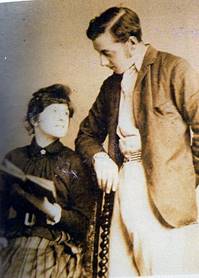
Harold Copping and Violet Amy Prout at the time of their engagement
Arthur Copping
Another son of Rosa and Edward was Arthur, born in 1865. They were living at 18 Lady Somerset Road. Arthur was deeply religious, becoming a noted author, journalist and traveller. He wrote many books about the Holy Land, mainly published by the Religious Tract Society, some illustrated by his brother, Harold. He was a member of the Salvation Army.
In World War I he put his Salvationist principles into practice and became attached to several battalions as a non-combatant Salvation Army officer
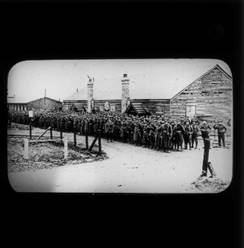
A Salvation Army ‘hut’ during the First World War, circa.1915
and witnessed at first hand the suffering and the bloodshed in the front line. He described his experiences in Souls in Khaki.
From 1918 to 1920, he was the Russia correspondent for the Daily Chronicle and the first British journalist to report from the new Soviet Union.
Between the wars he concentrated on the article and bools on the work of the Salvation Army in the British colonies in Africa.
He also established himself as a journalist writing on social issues and poverty in London for the Daily News. He started publishing novels in 1907.
In 1910, he went to Canada and three books on Canada followed.
In 1889 Arthur Copping married Annie Knaggs (born 1865, also from Camden) in 1889 at St Paul's Chapel, Kentish Town. Sadly, she died aged 38 in 1903.
Arthur died in Salisbury in 1941, aged 75.
Victor Albert
Victor was born in Bristol in 1835, the eldest surviving son of Skinner and Maria.
He spent his childhood in Australia with his parents. After their return young Albert certainly lent his father a hand in displaying Skinner’s Australian scenes on glass lantern slides and as a panorama. This project did not involve photography, which was by then coming into its own, but it made use of closely associated technical equipment and expertise.
One of the venues where the slides were shown was the Royal Polytechnic Institute at 309 Regent Street, an address that played an important role in the Prout family history and in the development of photography in general.
David Simkin, who has written a great deal about the history of photography, particularly in Sussex (and from whom much of the present information was drawn) has shown that in the 1851 census only ten or so Londoners described themselves as some sort of professional photographer but that by 1855 there were over a hundred photographic businesses in London, many in Regent Street. By 1861 there were nearly three hundred.
Skinner Prout was probably too far into a traditional career in painting to get directly involved in this new world of photography. But for Victor it was different. He was fifteen when he assisted his father at the diorama in Leicester Square and between then and his early twenties, photography looked like a business in which it might be easy to succeed. Even with little or no artistic talent one might get by on technical improvements of one kind or another. In fact, Victor inherited the Prout family artistic gene and developed a technical originality as well.
In 1852 he got himself to Boston, America, learning how to use the daguerreotype process, which had been invented in 1839. Soon after his return he started the project for which he is now best known, a photographic record of the Thames from London to Oxford.
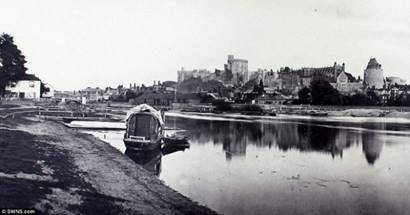
He built a makeshift darkroom on a boat and travelled up and down the river, processing his wet plate negatives and making albumen prints as he went along. Prout claimed to have invented a panoramic camera which 'travels on a central point, so that a much larger range of vision can be included than by any ordinary photographic apparatus’. (This project led to a major character in Diane Setterfield’s novel Once Upon a River being based on him.) Parr and Badger say: ”While their possible technique is of interest, what is much more important is how good they are as pictures.
This
project started as a commission but he seems to have missed the deadline and so
got no remuneration. This led to him going bankrupt for the first time.
One of hi first successes was in 1860 when he produced what were described as “Undoubtedly the finest Nineteenth Century interior views of Westminster Abbey” which was then being renovated.
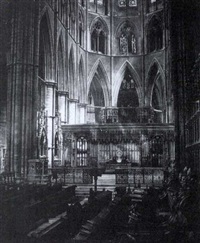
In the same year he married Amy Barber, who lived nearby in St Augustine’s Road.
By 1860 he was again in Sydney working as a photographer, and may be the author of a poignant picture, Thylacine Bagged (he stayed in Tasmania briefly in the late 1860s
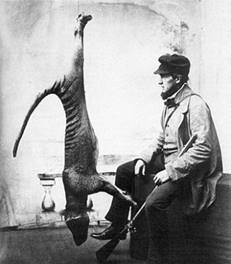
He soon returned to England and established a reputation as 'one of the best art-photographers in London’.
He was invited to Abergeldie Castle (Scotland) by the Prince and Princess of Wales and took their portraits.
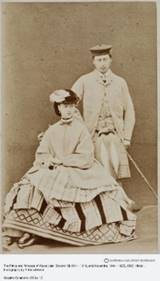
Victor attended balls and dinner parties and his name was in all the papers. Like another Raleigh, he gallantly threw down () his plaid for the Princess of Wales to walk upon on descending from her carriage.
Prout returned to Sydney in 1866 and soon joined James and William Freeman in George Street, forming he company Freeman, Brothers and Prout. They sold Prout’s cartes-de-visite of the Prince and Princess of Wales from their studio. With this lure the firm immediately captured Governor Sir John and Lady Young as patrons. They exhibited about 50 photographic views of Sydney buildings and scenery at the 1867 Paris Universal Exhibition.
Prout then set up as a portrait painter, one of the first to make such a reversal. He showed paintings, not photographs, with the Academy of Art in 1872.
According to Frances Hodgson: “Victor Prout came back from Australia raving so badly from the madness known then as General Paralysis of the Insane (the tertiary stage of syphilis) that he had at one time on the voyage to be tied to the mast of his ship.”
He died in April 1877 at the Sussex Lunatic Asylum near Chichester.
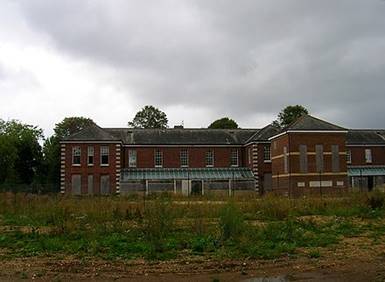
Graylingwell Hospital ( formerly Sussex Lunatic
Asylum)
(francishodgson.com/2013/11/06/a-near-approach-to-greatness-meet-victor-albert-prout/)
Numerous key galleries and museums such as Tokyo Photographic Art Museum have featured Victor Prout's work in the
past
Francis John (Frank) Prout
Frank was born in 1846 in Tasmania.
His elder brothers, Victor Albert and Edgar became professional photographers. When the 1871 census was taken, Frank Prout was living with his parents and two unmarried sisters at 4 Leighton Crescent, off Leighton Road, near Camden New Town. His profession is given ‘Photographer’.
David Webb, the historian of photography in London, believed that Frank was with Edgar at 309 Regent Street, London, operating under the name of Prout Brothers and trading as the Royal Polytechnic Photographic Company. But he might have been with the photographic firm of Prout and Mills at 22 Newman Street (near Oxford Street) between 1870 and 1871.
Edgar Prout
Edgar was born in
1839 in Euston Road. In 1861 he married Elizabeth Louisa Shaw (1840-1929). They
had two children, Edgar and Lizzie.
About 1865 Edgar
started working as an assistant, and then partner, with Charles Newcombe, a
relative, at a photographic portrait studio in Regent Street, soon taking over
the business under the name Edgar Prout & Co and almost immediately selling
it on to the London photographer Henry Flather.
In 1868, Edgar
acquired Richard Lambert Allan's photographic studio at 13 Murray Street,
running the business and living there until 1887. After that he ran a
photographic portrait studio at 76 St Paul's Road (now Agar Grove) until his
death in 1900.
Sources
This account is based a number of sources. To avoid overburdening the text there are no footnotes linking the story with the sources.
Books and articles
Brown, Tony and Kolenberg,
Hendrik Skinner
Prout in 1840-48 Tasmanian
Museum and Art allery, Hobart, 1986
Brown, Tony John Skinner Prout: a
colonial artist Art
and Australia, vol. 22, no. 4, 1985
Brown, Tony John Skinner Prout: an
early lithographer The World
of Antiques & Art, Jun-Dec 2000
Diehl, Alice M The True Story of My Life John
Lane Bodley Head, 1908
Kerr, Joan (editor) Dictionary of Australian artists: painters,
sketchers, photographers and engravers to 1870, Oxford University Press, Melbourne,
1992
Lum, Julia Fire-Stick Picturesque: Landscape Art and
Early Colonial Tasmania British
Art Studies, Issue 10
Osmond, Joan Victor Albert Prout – A Mid-Victorian
Photographer (1835-1877) J
& J Osmond, 2013
Prout J S The Castles and
Abbeys of Monmouthshire
1838
Diane Setterfield Once Upon a
River (novel)
Internet
Skinner and
Maria Prout
http://www.hellenicaworld.com/Art/Paintings/en/JohnSkinnerProut.html
http://www.peppiattfineart.co.uk/display.php?KT_artists=John+Skinner+Prout
http://www.peppiattfineart.co.uk/display.php?KT_artists=John+Skinner+Prout
http://www.victorianresearch.org/atcl/show_author.php?aid=432
https://adb.anu.edu.au/biography/hill--prout-2183
https://adb.anu.edu.au/biography/hill-samuel-prout-2183
https://adb.anu.edu.au/biography/rae-john-4443
https://adb.anu.edu.au/biography/prout-john-skinner-2565
https://allpoetry.com/Samuel-Prout-Hill
https://artuk.org/visit/venues/reading-museum-town-hall-3265
https://dictionaryofsydney.org/person/prout_cornelius
https://en.wikipedia.org/wiki/Alice_Diehl
https://en.wikipedia.org/wiki/Art_Gallery_of_New_South_Wales
https://en.wikipedia.org/wiki/Bathurst,_New_South_Wales
https://en.wikipedia.org/wiki/Black_War
https://en.wikipedia.org/wiki/Highgate_Cemetery
https://en.wikipedia.org/wiki/Conrad_Martens
https://en.wikipedia.org/wiki/Jane_Franklin
https://en.wikipedia.org/wiki/John_Franklin
https://en.wikipedia.org/wiki/John_Glover_(artist)
https://en.wikipedia.org/wiki/John_Skinner_Prout
https://en.wikipedia.org/wiki/Lithography
https://en.wikipedia.org/wiki/Moving_panorama
https://en.wikipedia.org/wiki/Oyster_Cove,_Tasmania#History
https://en.wikipedia.org/wiki/Royal_Institute_of_Painters_in_Water_Coloursx`x``
https://en.wikipedia.org/wiki/Sydney_Gazette
https://en.wikipedia.org/wiki/The_Art_Journal
https://en.wikipedia.org/wiki/The_Australian_(1824_newspaper)
https://en.wikipedia.org/wiki/The_Illustrated_London_News
https://etched-on-devons-memory.blogspot.com/2017/03/biographical-dictionary.html
https://rst.org.au/francis-simpkinson-de-wesselow/
https://www.ancestry.co.uk/search/categories/42/?name=Mark_Prout&birth=1831_England
https://www.beaumarisartgroup.org.au/j-artist/j-skinner-prout-artist.html
https://www.bishopsgate.org.uk/collections/webb-david
https://www.daao.org.au/bio/maria-heathilla-prout/biography/
https://www.geni.com/people/Francis-Prout/6000000176733058850
https://www.google.com/search?q=camden+St&rlz=1C1CHBD_en-GBGB913GB913&sxsrf=APq-WBtZSvlbE-tIRzWhwXZSDfbZ9UQ-6A%3A1648644223395&ei=f1BEYtXVF9WA8gLcharADg&ved=0ahUKEwiVka-q7u32AhVVgFwKHdyCCugQ4dUDCA4&uact=5&oq=camden+St&gs_lcp=Cgdnd3Mtd2l6EAMyCwguEIAEEMcBEK8BMgUIABCABDIOCAAQgAQQsQMQgwEQyQMyCwguEIAEEMcBEK8BMgUIABCABDIFCAAQgAQyBQgAEIAEMggIABCABBCxAzIOCC4QgAQQxwEQrwEQ1AIyCwguEIAEEMcBEK8BOgoILhCxAxDUAhBDOgsIABCABBCxAxCDAToECAAQQzoOCC4QgAQQsQMQxwEQrwE6CwguEMcBEK8BEJECSgQIQRgBSgQIRhgAUNIeWIkyYJQ3aAZwAHgAgAGPC4gBphySAQU2LTEuMpgBAKABAcABAQ&sclient=gws-wiz
https://www.google.com/search?q=Osnaburgh+Street&rlz=1C1CHBD_en-GBGB913GB913&oq=Osnaburgh+Street&aqs=chrome..69i57.2137400j0j9&sourceid=chrome&ie=UTF-8
https://www.lythamstannesartcollection.org/rue-st-etienne-rouen-by-john-skinner-prout.html
https://www.nla.gov.au/collections/guide-selected-collections/prout-collection
https://www.printsandprintmaking.gov.au/references/6289/
https://www.scrippscollege.edu/academics/faculty/profile/julia-lum
https://www.sydney.edu.au/paradisec/australharmony/marsh-family.php
https://www.thurrock.gov.uk/thurrock-historical-people/alice-mangold-diehl-musician-and-novelist
https://www.thurrock-history.org.uk/alice.htm
https://www.utas.edu.au/library/companion_to_tasmanian_history/D/Depression%20of%20the%201840s.htm
https://www.wikitree.com/genealogy/Prout-Family-Tree-311
https://www.wikitree.com/wiki/Nowell-917
Victor Albert
Prout
https://adb.anu.edu.au/biography/young-sir-john-4905
https://alchetron.com/John-Skinner-Prout
http://brianhuman.co.uk/wp/victor-prout/
https://bearalley.blogspot.com/2018/10/victor-prout.html
https://en.wikipedia.org/wiki/Exposition_Universelle_(1867)
https://francishodgson.com/2013/11/06/a-near-approach-to-greatness-meet-victor-albert-prout/
https://harvardartmuseums.org/collections/person/22256?person=22256
https://natlib.govt.nz/records/22428789
https://www.artfund.org/supporting-museums/art-weve-helped-buy/artwork/6905/continental-street-scene
https://www.daao.org.au/bio/victor-albert-prout/biography/
https://en.wikipedia.org/wiki/George_Street,_Sydney
https://www.dianesetterfield.com/profile/
https://www.mutualart.com/Artist/Victor-Prout/564E08D56B36963B/Biography
https://www.nationalgalleries.org/art-and-artists/artists/victor-albert-prout
https://www.photohistory-sussex.co.uk/
Victor William Prout
https://bearalley.blogspot.com/2018/10/victor-prout.html
http://britishphotohistory.ning.com/profiles/blogs/freeman-brothers-photographic-studio-large-format-glass-plates
https://en.wikipedia.org/wiki/Graylingwell_Hospital
https://francishodgson.com/2013/11/06/a-near-approach-to-greatness-meet-victor-albert-prout/
https://www.phaidon.com/store/photography/the-photobook-a-history-9780714842851/
Nowell
https://en.wikipedia.org/wiki/Imperial_Service_Order
https://www.wikitree.com/wiki/Nowell-917
Dandridge
chrome-extension://oemmndcbldboiebfnladdacbdfmadadm/https://press-files.anu.edu.au/downloads/press/n4260/pdf/ch06.pdf
https://adb.anu.edu.au/biography/prout-john-skinner-2565
https://ancestors.familysearch.org/en/MLHV-CJ4/john-strange-dandridge-jr-1823-1904
https://books.google.co.uk/books?id=2jd5CAAAQBAJ&pg=PT281&lpg=PT281&dq=john+dandridge+aborigines&source=bl'&ots=7gnunUlZ4j&sig=ACfU3U375QGUqsx9HJ-Muhj5nBKSwCccRQ&hl=en&sa=X&ved='2ahUKEwjH88aFlrn0AhVkRvEDHaUdAkUQ6AF6BAghEAM#v=onepage&q=john%20dandridge%20aborigines&f=false
https://collection.sl.nsw.gov.au/record/74VM4p3yND4Z
https://en.wikipedia.org/wiki/John_Skinner_Prout
https://en.wikipedia.org/wiki/Royal_Victoria_Theatre,_Sydney
https://www.myheritage.com/names/john_dandridge
https://www.ourtasmania.com.au/hobart/oyster-cove-station.html
https://www.utas.edu.au/library/companion_to_tasmanian_history/O/Oyster%20Cove.htm
https://www.wikitree.com/wiki/Dandridge-408
Edward Copping
http://www.victorianresearch.org/atcl/show_author.php?aid=1150
https://collection.sl.nsw.gov.au/record/74VM4p3yND
Harold Copping
https://en.wikipedia.org/wiki/Harold_Copping
https://www.reddit.com/r/Catholicism/comments/k20jzv/free_friday_the_hope_of_the_world_by_harold/
Arthur Copping
https://thewritersarms.blogspot.com/2010/07/arthur-e-copping-novelist.html